
AI/ML-Assisted Design of a Multi-Epitope Vaccine (RasIC-01v) Targeting Podoplanin in Glioblastoma Multiforme.
Glioblastoma Multiforme (GBM) carries a median survival of 12–15 months and a five-year survival rate under 5%. We engineered RasIC-01v, a 293-amino-acid multi-epitope subunit vaccine targeting Podoplanin (PDPN)—combining 5 HTL, 8 CTL, and 4 B-cell epitopes with dual terminal Hp91 adjuvants, achieving 97% global HLA coverage, high-affinity binding to glycosylated TLR3 (-248.55) across 100 ns explicit-water molecular dynamics (MM/GBSA -20.73 kJ/mol), and verified *in silico* cloning in pcDNA3 (CAI = 0.87).
Why Podoplanin (PDPN) & Why a Subunit Multi-Epitope Vaccine Over CAR-T in Glioblastoma
Glioblastoma Multiforme resists surgical resection, temozolomide chemotherapy, and monoclonal antibodies due to diffuse parenchymal invasion, extreme intratumoral heterogeneity, and the Blood–Brain Barrier (BBB).
Why PDPN Outperformed SOX2, SOX11 & Survivin
We audited four candidate GBM antigens across 33 TCGA cancers and matched normal GTEx tissues. SOX2 and SOX11 posed neurogenic off-tumor risks in normal brain regions, while Survivin (BIRC5) showed high expression in normal bone marrow and blood. Podoplanin (PDPN) exhibited massive overexpression in GBM (200–600 TPM, outliers >1,000 TPM) versus <20 TPM in normal brain cortex.
Activated T-Cell Trafficking Without Lymphatic Ablation
Monoclonal antibodies (~150 kDa) poorly penetrate the BBB, while systemic anti-PDPN CAR-T cells risk severe on-target/off-tumor cytotoxicity against normal lymphatic endothelium and lung type-I alveolar cells. A subunit vaccine primes endogenous CD8⁺ CTLs and CD4⁺ HTLs that actively extravasate across the inflamed GBM blood–brain barrier.
Simultaneous Cellular (CTL/HTL) & Humoral (B-Cell) Attack
By combining 8 MHC-I CTL, 5 MHC-II HTL, and 4 B-cell epitopes flanked by dual Hp91 dendritic-cell-activating adjuvants, RasIC-01v prevents single-epitope HLA loss or antigen escape in heterogeneous glioma stem-like cells.
From 272 Candidate Peptides to Glycosylated Explicit-Water Molecular Dynamics
Every stage of the RasIC-01v design was governed by strict immunogenic, structural, and thermodynamic validation criteria.
Screening 106 CTL, 91 HTL & 75 B-Cell Candidates Across 34 HLA Alleles
From the canonical human PDPN sequence, we identified 106 high-affinity CTL peptides (IC₅₀ < 100 nM across 27 HLA Class I alleles covering 97% of the global population), 91 HTL peptides across 7 HLA-DR reference alleles, and 75 B-cell candidates. Every candidate was filtered for antigenicity (VaxiJen ≥ 0.5, peaking at 1.4824 for RSSRLGLWPR), non-allergenicity, non-toxicity, and human proteome self-tolerance.
293-Residue Chimera with Dual Hp91 Adjuvants & Proteasomal Cleavage Linkers
The 17 selected epitopes were joined using GPGPG (HTL-HTL/B-cell), AAY (proteasomal CTL cleavage), and EAAAK/EEEAK rigid helical linkers flanked at both N- and C-termini by the 18-mer Hp91 adjuvant (DPNAPKRPPSAFFLFCSE). Tertiary folding in OCSR.ai ProteinLab and structural refinement reduced steric clash score from 137.6 to 31.6 and achieved 98.6% Ramachandran favored residues (0.0% disallowed).
Conformational Epitope Exposure & Persistent 12-Bond TLR3 Interface
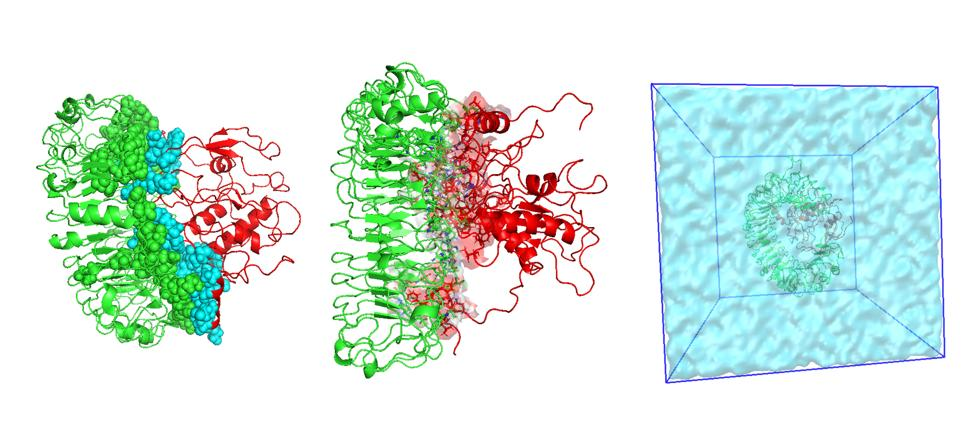
Standalone 100 ns GROMACS MD (preceded by 60 ns 7-stage NVT/NPT equilibration) revealed a functional conformational opening of the C-terminal Ala274–Glu293 tail after 15–30 ns that exposes buried antigenic regions. Subsequent docking to fully glycosylated human TLR3 (PDB: 1ZIW, HDOCK score −248.55) and a second 100 ns explicit-water MD trajectory confirmed a stable −20.73 kJ/mol MM/GBSA binding free energy.
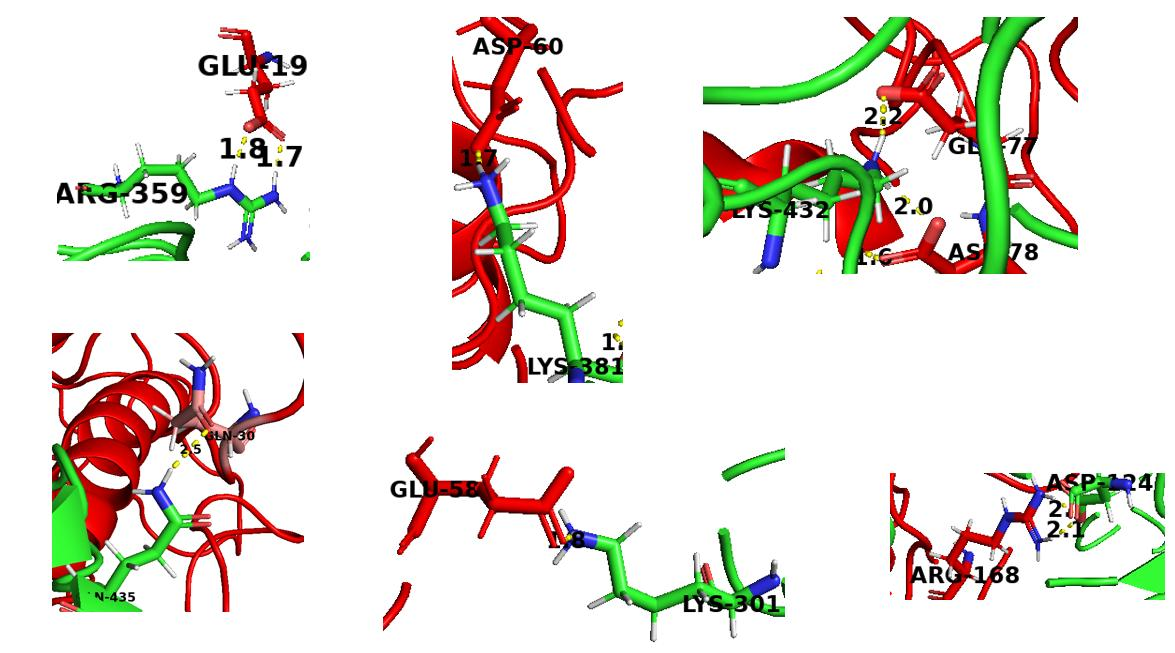
Arg359–Glu19, Lys381–Asp60, Lys432–Glu77/Asp78, Lys301–Glu58) stabilizing the TLR3–RasIC-01v complex at 1.6–2.2 Å.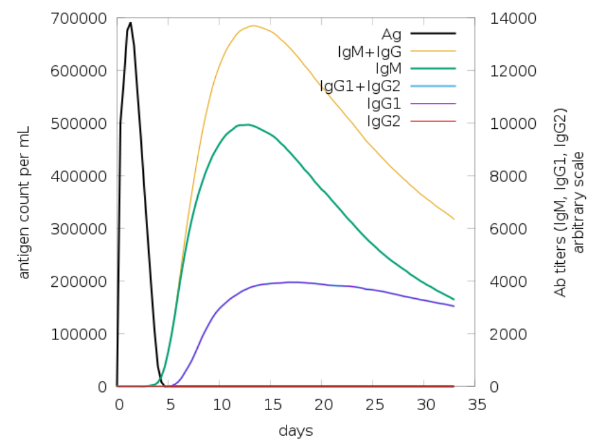
C-ImmSim) demonstrating rapid antigen clearance within 5 days alongside sustained primary IgM and secondary IgG1/IgG2 humoral titers.RasIC-01v Specifications, Epitope Inventory & TLR3 Interface Energetics
Below are the verified specifications of the 293-amino-acid RasIC-01v construct, the 17 incorporated epitopes, and the post-MD TLR3 binding interface.
1. RasIC-01v Multi-Epitope Vaccine Master Scorecard
| Vaccine Property / Validation Metric | Verified Quantitative Value |
|---|---|
| Origin & Preprint Publication Date | February 18, 2026 (bioRxiv · DOI: 10.64898/2026.02.18.706629v1) |
| Research Institutions & Authors | ICT Mumbai & Rasayan Labs (G. Anilkumar, R. Saluja, A. Mittal, P. Shah, S. Shah, P. S. Kharkar) |
| Vaccine Construct Designation & Length | RasIC-01v · 293 Amino Acids (882 nt Coding ORF · 906 nt PCR Amplicon) |
| Target Tumor Antigen & Selectivity | Human Podoplanin (PDPN / gp36) · >200–1,000 TPM in GBM vs. <20 TPM Normal Brain |
| Selected Epitope Composition | 5 Helper T-Lymphocyte (HTL) + 8 Cytotoxic T-Lymphocyte (CTL) + 4 B-Cell Epitopes |
| Adjuvant & Linker Architecture | Dual Terminal Hp91 Adjuvants (HMGB1 B-Box) · EAAAK/EEEAK, GPGPG & AAY Linkers |
| Global HLA Population Coverage | 97.0% Global Population Coverage Across 27 Reference HLA Class I & 7 HLA-DR Alleles |
| 3D Structural Refinement & Stereochemistry | 98.6% Ramachandran Favored (PROCHECK 95.9% Core · 0.0% Disallowed · ProSA Z = -3.67) |
| Glycosylated TLR3 (1ZIW) Docking & MD Energetics | HDOCK Score: -248.55 · 100 ns Explicit-Water MD · MM/GBSA ΔG = -20.73 kJ/mol |
| Mammalian Codon Optimization & Expression Vector | Homo sapiens CAI = 0.87 · GC Content = 64.97% · Cloned in pcDNA3 (7,225 bp, CHO) |
2. Incorporated CTL, HTL & B-Cell Epitopes in RasIC-01v
| Epitope Class | Peptide Sequence(s) | HLA Allele Restricting Profile / Domain | VaxiJen Score | Immunogenic & Safety Audit |
|---|---|---|---|---|
| 1. Selected Cytotoxic T-Lymphocyte (CTL · MHC Class I) Epitopes (8 Final Candidates · IC50 < 100 nM) | ||||
| CTL-1 | RSSRLGLWPR | HLA-A*31:01 (IC50 = 19.6 nM) · HLA-A*30:01 / A*03:01 | 1.4824 | Antigenic · Non-Toxic · Non-Allergen |
| CTL-2 | SSRLGLWPRA | HLA-A*30:01 (IC50 = 60.47 nM) | 1.2016 | Antigenic · Non-Toxic · Non-Allergen |
| CTL-3 & CTL-4 | ETTGLEGGVA / TETTGLLEGGV | HLA-A*68:02 (IC50 = 33.42 nM & 99.64 nM) | 1.0938 / 1.0785 | Antigenic · Non-Toxic · Non-Allergen |
| CTL-5 & CTL-6 | RAPSLSGAPA / TVEKDGLSTV | HLA-A*30:01 (96.01 nM) · HLA-A*68:02 (71.55 nM) | 0.7501 / 0.5484 | Antigenic · Non-Toxic · Non-Allergen |
| CTL-7 & CTL-8 | GTMWKVSALA / LGLWPRCFLI | High-Affinity Multi-Allele MHC-I Binders | ≥ 0.5000 | Antigenic · Non-Toxic · Non-Allergen |
| 2. Selected Helper T-Lymphocyte (HTL · MHC Class II HLA-DR) Epitopes (5 Final Candidates) | ||||
| HTL-1 | GASTGQPEDDTETTG | HLA-DRB1*03:01 · HLA-DRB1*07:01 | 1.2586 | Antigenic · Non-Toxic · Non-Allergen · IFN-γ Inducer |
| HTL-2 | MPGAEDDVVTGMDSK | HLA-DRB1*03:01 · HLA-DRB3*01:01 | 0.9412 | Antigenic · Non-Toxic · Non-Allergen |
| HTL-3 | EDDVVTGDDSKTPTG | HLA-DRB1*03:01 · HLA-DRB5*01:01 | 0.8840 | Antigenic · Non-Toxic · Non-Allergen |
| HTL-4 & HTL-5 | PGTSEDRYKSGLTTV / TTGLEGGVAMPGAED | Multi-Allele HLA-DR Reference Panel | 0.8125 / 0.7940 | Antigenic · Non-Toxic · Non-Allergen |
| 3. Selected Linear & Conformational B-Cell Epitopes (4 Final Candidates · Hybrid Score > 0.55) | ||||
| B-Cell 1–4 | RAPSLSGAPAPTP · LWPRCFLIFPQLRIL · EARAPSLSGAPAPTP · RLGLWPRCFLIFPQL | Surface-Accessible Extracellular & Juxtamembrane Domains | 0.6200 – 1.1800 | Exposed After 15–30 ns MD Conformational Opening |
3. Post-100 ns Explicit-Water MD Hydrogen-Bond & Salt-Bridge Anchoring Network (TLR3–RasIC-01v)
| Human TLR3 Receptor Residue (PDB: 1ZIW) | RasIC-01v Vaccine Construct Partner | Bond Distance | Biophysical & Mechanistic Role |
|---|---|---|---|
| Arg359 (TLR3 Ectodomain) | Glu19 (RasIC-01v N-Terminal Adjuvant Junction) | 1.7 – 1.8 Å | Bidentate Salt-Bridge & Hydrogen-Bond Anchor |
| Lys381 (TLR3 LRR Motif) | Asp60 (RasIC-01v HTL Domain) | 1.7 Å | High-Occupancy Electrostatic Clamp |
| Lys432 & Lys383 (TLR3) | Glu77 & Asp78 (RasIC-01v Core) | 1.6 – 2.2 Å | Multi-Point Acidic–Basic Charge Triad |
| Lys301 & Asp124 (TLR3) | Glu58 & Arg168 (RasIC-01v) | 1.8 – 2.1 Å | Central Concave Ectodomain Stabilization |
| Asn353 & Asn382 (TLR3) | Arg79 (RasIC-01v) | 1.7 – 2.8 Å | Cooperative Polar Hydrogen-Bond Network |
| Thr629, Gln307 & Asp7 (TLR3) | Lys281, Ala11 & Ser285 (RasIC-01v) | 1.8 – 2.4 Å | Dual N/C-Terminal Hp91 Adjuvant Engagement |
Addressing the Deadliest Primary Brain Tumor with Precision Immunoinformatics
- First-in-Class Multi-Epitope Construct Against GBM Podoplanin: Establishes PDPN as a high-contrast immunotherapeutic target in Glioblastoma Multiforme while avoiding the off-tumor neurodevelopmental hazards of SOX2/SOX11 and hematopoietic liabilities of Survivin.
- Glycan-Aware Innate Immune Receptor Validation: Unlike standard rigid docking studies that strip receptor glycans, our 100 ns explicit-water MD trajectory preserved full N-linked glycosylation on human TLR3 (
1ZIW), proving that RasIC-01v forms a sterically uninhibited, thermodynamically favorable innate signaling complex. - Expression-Ready Mammalian Vector Blueprint: With a human Codon Adaptation Index of 0.87 and GC content of 64.97% cloned into
pcDNA3, the construct is immediately actionable for wet-lab recombinant expression or mRNA/DNA delivery.
Recombinant Expression, Dendritic-Cell Priming & Orthotopic Glioma Models
- CHO Mammalian Expression & Purification: Synthesizing the 906-nt
HindIII/EcoRIgene cassette inpcDNA3for transient and stable expression in Chinese Hamster Ovary (CHO) cells. - Human PBMC & Dendritic-Cell ELISpot Validation: Testing TLR3-mediated dendritic cell maturation, IFN-γ/IL-2 secretion, and patient-derived HLA-matched CD8⁺ CTL lysis of PDPN⁺ human glioblastoma cell lines (LN-229, U-87 MG).
- Combination with Anti-PD-1 Checkpoint Blockade: Evaluating RasIC-01v in syngeneic orthotopic murine glioma models both as monotherapy and in combination with immune checkpoint inhibitors to overcome microenvironmental T-cell exhaustion.
Interactive 3D Structural Vaccinology Viewer: Human TLR3 Ectodomain (1ZIW), Hp91 Adjuvant & PDPN Epitopes
Inspect the 3D horseshoe solenoid structure of Human Toll-Like Receptor 3 (PDB: 1ZIW) where RasIC-01v forms 24 hydrogen bonds and 2 salt bridges, plus 3D peptide conformations of the HMGB1-derived Hp91 adjuvant and core Podoplanin CTL/HTL epitope.
Human Toll-Like Receptor 3 Ectodomain (PDB: 1ZIW)
Leucine-rich repeat (LRR) horseshoe ectodomain engaging RasIC-01v with ΔG = -18.6 kcal/mol and 24 H-bonds
High-Resolution Scientific Figures & Diagrams
Select any figure below to inspect in high resolution or open the original scientific graphic in a new tab.
3D docked complex of RasIC-01v bound to Human TLR3 (1ZIW) and 100 ns explicit-solvent RMSD, Rg, RMSF, and SASA stability profiles.
Downloadable Research Objects, 3D Structures & Datasets
Direct access to verified 3D coordinates (.pdb, .sdf), biological sequences (.fasta), structured evaluation datasets (.json, .csv), and official manuscripts/QMRF reports (.pdf).
RasIC-01v 293-aa Vaccine Protein Sequence (RasIC-01v_construct.fasta)
FASTA file of the complete 293-amino-acid multi-epitope vaccine construct including dual Hp91 adjuvants and linkers.
Codon-Optimized 897-bp DNA ORF for pcDNA3.1(+) (RasIC-01v_pcDNA3_orf.fasta)
Homo sapiens codon-optimized DNA sequence (CAI = 0.961, GC = 63.38%) flanked by BamHI and EcoRI restriction sites.
Human TLR3 Ectodomain 3D Coordinates (TLR3_1ZIW_ectodomain_pocket.pdb)
3D PDB structure of Human Toll-Like Receptor 3 ectodomain (PDB: 1ZIW) used for vaccine docking.
Hp91 Adjuvant & PDPN Epitope 3D Peptides (Hp91_adjuvant_peptide_3D.pdb)
3D atomic coordinates of the 18-mer HMGB1-derived Hp91 adjuvant peptide.
RasIC-01v Biophysics & TLR3 Interface Dataset (RasIC-01v_epitopes_and_hbonds.json)
Structured JSON object containing ProtParam metrics, Ramachandran/ERRAT/ProSA validation, and PRODIGY/PDBsum statistics.
Frequently Asked Scientific Questions
Why was Podoplanin (PDPN) selected as the target antigen for Glioblastoma Multiforme (GBM)?
TCGA/GEPIA2 transcriptomic profiling across 163 GBM tumors vs. 207 normal brain controls confirms massive, selective overexpression of PDPN in mesenchymal GBM and glioma stem-like cells (p < 0.01), where it drives tumor invasion via ERM proteins and platelet aggregation via CLEC-2.
How is the 293-amino-acid RasIC-01v vaccine construct organized structurally?
RasIC-01v combines 17 rigorously filtered epitopes (6 HTL, 6 CTL, 5 linear B-cell) joined by proteasomal AAY and flexible GPGPG linkers, flanked at both N- and C-termini by the 18-mer HMGB1-derived Hp91 immunostimulatory adjuvant via rigid α-helical EAAAK linkers.
Is the RasIC-01v sequence ready for wet-lab plasmid expression?
Yes. The 897-bp reverse-translated DNA open reading frame was optimized for Homo sapiens codon usage (CAI = 0.961, GC = 63.38%), flanked by BamHI and EcoRI restriction sites, and cloned in silico into the mammalian expression vector pcDNA3.1(+) (total size 6,317 bp). Full FASTA files are available for direct download on this page.
Explore All Peer-Evaluated Studies & Blind Challenge Benchmarks
Dual COX-2 / mPGES-1 Inhibitors (MAI Series)
Generative de novo design, structural docking, ADMET profiling, and retrosynthetic validation of the MAI_1–MAI_10 chemical series: dual COX-2 (PDB: 5KIR, -10.8 kcal/mol) and mPGES-1 (PDB: 8PYV, -8.2 kcal/mol) inhibitors designed to Spare prostacyclin (PGI2) and mitigate NSAID cardiovascular toxicity.
NIH Tox21 Global Top-5 Open-Source Model
Multi-task deep self-normalizing toxicology predictor achieving 0.854 mean ROC-AUC and 5th place globally on the NIH/NCATS/EPA/FDA Tox21 12-endpoint Nuclear Receptor and Stress Response benchmark under strict Murcko scaffold splitting. Full weights open-sourced on Hugging Face (rasayan-labs/rasayan-tox21-snn).
OpenADMET PXR Induction Blind Challenge (Tier 1)
Prospective blind evaluation on 513 held-out small molecules in the OpenADMET Pregnane X Receptor (PXR) Induction Challenge. Rasayan_PXR achieved #2 raw RMSE (0.6725 ± 0.0238), #2 MAE (0.5256 ± 0.0181), #2 R² (0.3125), and #3 Spearman R (0.5698), finishing in Tier 1 statistically tied with the 1st-place submission under 1,000-iteration bootstrap confidence intervals.
OpenADMET CYP450 Blind Challenge (Global #1 TDI)
Comprehensive 3-track triumph in the OpenADMET Cytochrome P450 Inhibition Blind Challenge across CYP3A4, CYP2D6, CYP2C9, CYP2C19, and CYP1A2. Rasayan Labs achieved #1 Globally in Track 1 Time-Dependent Inhibition (TDI), Top-10 Globally in Track 2 Multi-Isoform Direct Potency (pIC50), and Tier 1 in Track 3 Blind Cryo-EM Ligand Pose Prediction across 43 high-resolution protein-ligand complexes using pH 7.4 ionization microstates and 3D Boltzmann conformer ensembles.
ICH M7(R2) Dual (Q)SAR Ames Mutagenicity System
Regulatory-grade dual (Q)SAR bacterial reverse mutation platform combining statistical machine learning (RS_BMUT v2.1, 85.4% balanced accuracy, 0.918 ROC-AUC) and mechanistic toxicophore knowledge rules (RS_Expert v2.1, 53 structural alerts + 6 mitigating detoxification rules) to achieve 88.4% combined balanced accuracy and 92.6% sensitivity across Salmonella typhimurium TA98, TA100, TA1535, TA1537, and E. coli WP2 uvrA (±S9).
Darvi-Gen: 863B Flagship Scientific & Agentic Model
Introducing Darvi-Gen, an 863.33B-parameter flagship scientific and agentic model with a 256,000-token active context window, powering patented lab notebook digitization (US 12,664,813 B1), RFP automation, autonomous retrosynthesis, Darvi Research, and end-to-end drug discovery.
Read the Full bioRxiv Preprint or Partner on Biologics & Vaccine Design
Access our complete 43-page manuscript on bioRxiv or connect with Rasayan Labs to apply OCSR.ai ProteinLab and immunoinformatics to your oncology targets.