
AI-Designed Family of Dual COX-2/mPGES-1 Inhibitors to Treat Inflammation with Greater Precision.
By targeting both Cyclooxygenase-2 (COX-2) and Microsomal Prostaglandin E Synthase-1 (mPGES-1) simultaneously while sparing gastrointestinal COX-1 and cardioprotective prostacyclin (PGI₂), we compressed early-stage anti-inflammatory drug design from years to three weeks—yielding 23 novel dual inhibitor candidates with binding affinities surpassing rofecoxib and 92.9% structural novelty across 44.3 million patents.

Breaking the Cardiovascular & Gastrointestinal Paradox of Anti-Inflammatory Medicine
Chronic inflammatory diseases affect hundreds of millions of patients worldwide, yet both traditional non-steroidal anti-inflammatory drugs (NSAIDs) and selective COX-2 inhibitors (coxibs) suffer from fundamental mechanism-based safety liabilities.
Non-Selective COX-1 Blockade & GI Ulceration
Conventional NSAIDs inhibit constitutive COX-1 alongside inducible COX-2. Because COX-1 maintains cytoprotective gastric mucosal prostaglandins, chronic blockade causes severe gastrointestinal bleeding, ulceration, and renal toxicity.
Prostacyclin (PGI₂) Suppression & Thrombosis
Selective COX-2 inhibitors (such as rofecoxib and valdecoxib) spare gastric COX-1 but completely block vascular endothelial PGI₂ synthesis while leaving COX-1-derived platelet thromboxane (TXA₂) unopposed—tipping vascular homeostasis toward myocardial infarction and stroke.
Dual COX-2 / mPGES-1 Precision Blockade
Terminal pro-inflammatory PGE₂ is synthesized from PGH₂ by inducible mPGES-1. Simultaneously modulating COX-2 and mPGES-1 suppresses pathogenic PGE₂ production without shunting PGH₂ excess or collapsing cardioprotective PGI₂ signaling.
Multi-Objective De Novo Design, Counter-Target Conditioning & Orthogonal 3D Physics
Rather than screening static commercial catalogs where dual COX-2/mPGES-1 chemotypes are virtually non-existent, we executed a closed-loop computational campaign integrating positive pharmacophore conditioning, explicit off-target penalties, global patent verification, and multi-crystal docking.
Teaching Selectivity & Cardiotoxicity Avoidance Up Front
We curated 308 experimentally verified selective COX-2 inhibitors (>10-fold selectivity over COX-1, spanning 218 distinct Bemis–Murcko scaffolds) alongside a dedicated 2,500-compound negative conditioning corpus (500 potent COX-1 inhibitors, 1,000 hERG blockers, 500 CYP2C9 inhibitors, and 500 CYP3A4 inhibitors). Generation was simultaneously guided by pharmacophore constraints (cyclic sulfonyl/sulfonamide motifs, moderate lipophilicity LogP 2–4.5, and controlled rotor count) while penalizing off-target similarity.
Multi-Crystal COX-2, Human Homology COX-1 & mPGES-1 Validation
To prevent single-structure docking artifacts, every surviving candidate was evaluated across four human COX-2 crystal structures (5KIR, 5IKR, 4PH9, 3NT1), two COX-1 structures (3N8Z plus a high-precision comparative human COX-1 model built from UniProt P23219 with 0.541 Å backbone RMSD against 6Y3C), and two human trimeric mPGES-1 structures (4YL3 and 8PYV).
44.3 Million Patents Audited & Retrosynthetic Route Verification
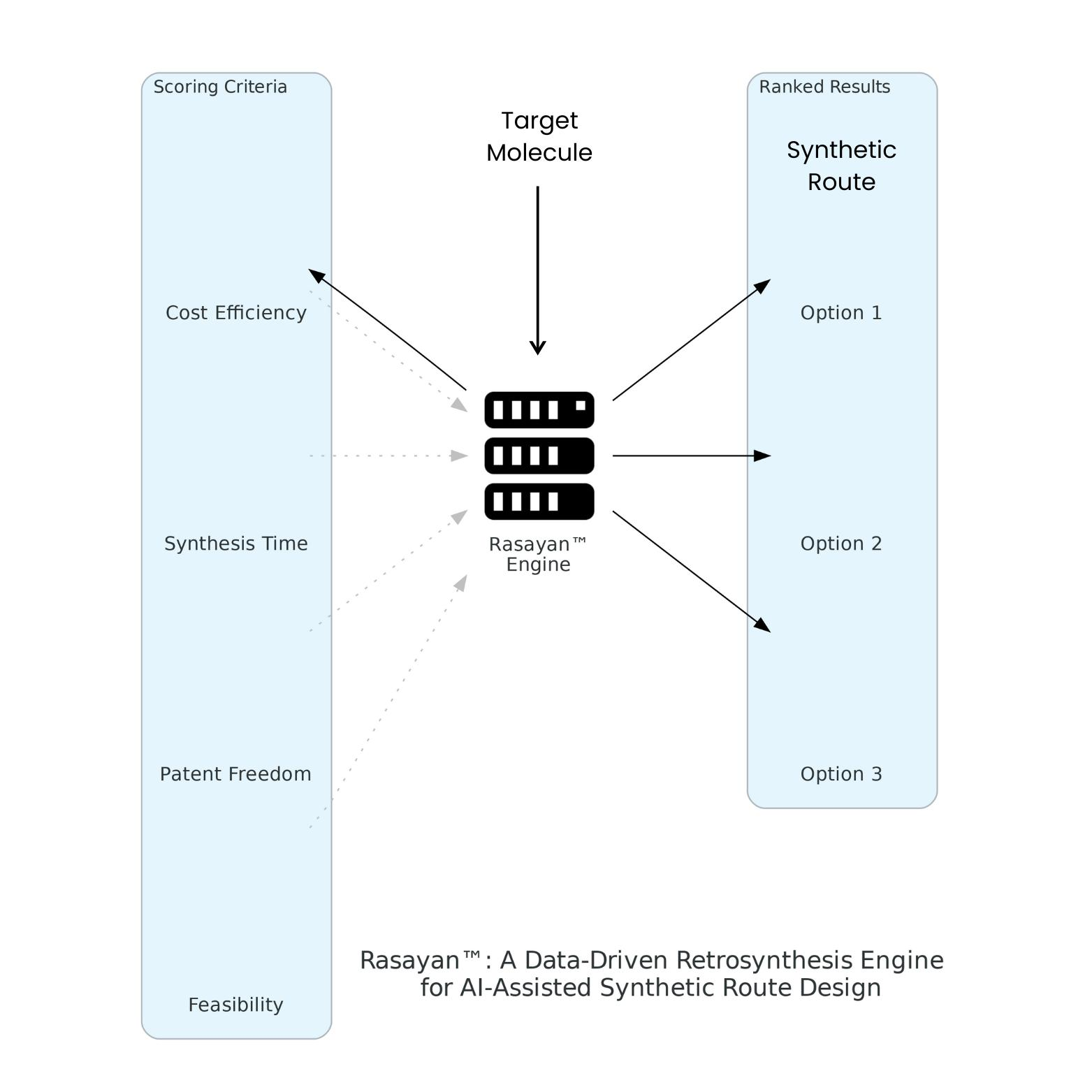
Candidates were audited against 44.3 million patent documents and 1.7 billion indexed chemical structures, confirming that 92.9% of generated leads have Tanimoto similarity < 0.8 to any known COX-2 inhibitor, with tractable 3-to-5-step convergent synthetic routes from commercial building blocks.
Study Metadata, Screening Funnel & Top Dual Inhibitor Scorecard
Across the 3,921-compound orthogonal docking cohort, 54.3% exhibited thermodynamic selectivity ΔGsel > 2.0 kcal/mol in favor of COX-2 over COX-1 (corresponding to >30-fold selectivity), culminating in 23 dual COX-2/mPGES-1 lead candidates.
1. Study Origin, Scope & Discovery Velocity
| Study Parameter | Verified Record & Quantitative Outcome |
|---|---|
| Origin & Preprint Publication Date | October 30, 2025 (ChemRxiv · DOI: 10.26434/chemrxiv-2025-49xk0) |
| International Media Coverage | November 10, 2025 (International Business Times Feature) |
| Research Institutions & Authors | ICT Mumbai & Rasayan Labs (P. S. Kharkar, A. Mittal, R. S. Saluja, S. Shah) |
| Discovery Timeline Compression | 3 Weeks (~1 Month) vs. 2–3 Years Conventional Hit Discovery |
| De Novo Chemical Space Explored | >2.5 Million Valid Structures · 50,000 Primary De Novo Library |
| Patent & Structural Novelty Audit | 92.9% Novel (Tanimoto < 0.8) Across 44.3M Patents & 1.7B Compounds |
| Final High-Confidence Dual Lead Candidates | 23 Dual COX-2 / mPGES-1 Inhibitors (MAI Series) |
2. Six-Stage Discovery & Multi-Parameter Filtering Funnel
| Pipeline Stage | Input Pool | Retained Molecules | Scientific & Quantitative Selection Criteria |
|---|---|---|---|
| Curated Knowledge Base & Counter-Target Conditioning | |||
| Positive Reference Set (Selective COX-2 Inhibitors) | Literature & ChEMBL | 308 Compounds (218 Scaffolds) | IC50 < 10 µM · >10-fold COX-2 over COX-1 selectivity |
| Multi-Target Off-Target Negative Conditioning Set | Counter-Assay Corpus | 2,500 Compounds | 500 COX-1 · 1,000 hERG · 500 CYP2C9 · 500 CYP3A4 |
| Multi-Stage De Novo Filtering, ADMET & Orthogonal 3D Docking | |||
| Stage 1 · Primary De Novo Molecular Generation | >2,500,000 Sampled | 50,000 Unique Molecules | 100% Valence Validity · 97.8% Uniqueness · 94.3% Novelty |
| Stage 2 · Primary Target Activity & Selectivity Screen | 50,000 | 16,984 (34.0%) | Predicted COX-2 IC50 < 1 µM · Selectivity Ratio > 10 |
| Stage 3 · Medicinal Chemistry & Structural Alert Triage | 16,984 | 4,567 (26.9%) | QED > 0.5 · SA ≤ 4.5 · Zero PAINS / Brenk / Reactive Alerts |
| Stage 4 · Global Patent & Freedom-to-Operate Verification | 4,567 | 4,219 (92.4%) | Screened against 44.3M patent documents & 1.7B structures |
| Stage 5 · Comprehensive ADMET & Safety Triage | 4,219 | 1,939 Strict (3,921 Docked) | LogS > -5 · Caco-2 > -5.15 · hERG IC50 > 10 µM · Ames Negative |
| Stage 6 · Orthogonal Multi-Crystal COX-2, COX-1 & mPGES-1 Docking | 3,921 | 23 Dual Lead Candidates | COX-2 (5KIR/5IKR/4PH9/3NT1) · COX-1 (3N8Z/Homology) · mPGES-1 (4YL3/8PYV) |
3. Top-5 Dual COX-2 / mPGES-1 Lead Candidates vs. Clinical Reference Standards
Binding free energies (kcal/mol) evaluated across human COX-2 (PDB: 5KIR), human trimeric mPGES-1 (PDB: 8PYV), and human COX-1, alongside Quantitative Estimate of Drug-likeness (QED) and Synthetic Accessibility (SA).
| Candidate / Reference | COX-2 Affinity (5KIR) | mPGES-1 Affinity (8PYV) | COX-1 Counter-Target | COX-2 / COX-1 Selectivity | QED / SA Score |
|---|---|---|---|---|---|
| MAI_2 | -10.5 kcal/mol | -9.15 kcal/mol | -5.1 kcal/mol | >100-fold (ΔG = -5.4 kcal/mol) | 0.73 / 2.8 |
| MAI_8 | -9.4 kcal/mol | -10.31 kcal/mol | -4.8 kcal/mol | >100-fold (ΔG = -4.6 kcal/mol) | 0.71 / 2.9 |
| MAI_4 | -9.8 kcal/mol | -9.42 kcal/mol | -5.3 kcal/mol | >100-fold (ΔG = -4.5 kcal/mol) | 0.74 / 2.7 |
| MAI_7 | -9.2 kcal/mol | -9.68 kcal/mol | -4.6 kcal/mol | >100-fold (ΔG = -4.6 kcal/mol) | 0.69 / 3.1 |
| MAI_9 | -8.8 kcal/mol | -8.85 kcal/mol | -4.3 kcal/mol | >100-fold (ΔG = -4.5 kcal/mol) | 0.72 / 2.6 |
| Rofecoxib (Reference) | -10.1 kcal/mol | Non-Dual Baseline | -6.4 kcal/mol | COX-2 Selective Only (Withdrawn CV Risk) | 0.67 / 2.1 |
| Celecoxib (Reference) | -9.6 kcal/mol | Weak / Off-Target | -6.8 kcal/mol | COX-2 Selective Standard | 0.63 / 2.3 |
A Blueprint for Polypharmacological Precision Design
- Resolving the $90B Anti-Inflammatory Safety Bottleneck: Demonstrates that single small molecules can be rationally engineered to co-inhibit two structurally distinct enzymes in the arachidonic acid cascade (heme-dependent COX-2 homodimer and glutathione-dependent mPGES-1 homotrimer).
- 100× Compression of Preclinical Ideation: Reduces hit generation, off-target counter-screening, and patent FTO auditing from years of iterative medicinal chemistry to a 3-week computational cycle.
- True De Novo Scaffold Discovery: With 92.9% of candidates structurally distinct from all patented COX-2 inhibitors across 44.3M patent documents, the study opens unencumbered white-space chemical series for non-opioid pain and inflammation management.
From In Silico Leads to Wet-Lab Synthesis & In Vivo Models
- Wet-Lab Chemical Synthesis of Top MAI Leads: Executing the convergent 3-to-5-step synthetic routes for
MAI_2,MAI_4,MAI_7,MAI_8, andMAI_9to confirm isolated yields and analytical purity. - Enzymatic & Human Whole-Blood Selectivity Assays: Measuring recombinant human COX-1, COX-2, and microsomal mPGES-1 IC₅₀ values alongside LPS-stimulated human whole-blood PGE₂ vs. PGI₂/TXB₂ ratios.
- Microsomal Stability & Preclinical PK/PD: Evaluating hepatocyte clearance, gastric mucosal safety, and anti-inflammatory efficacy in carrageenan-induced paw edema and collagen-induced arthritis models.
Interactive 3D Structural & Conformer Inspector: COX-2 (5KIR), mPGES-1 (8PYV) & Lead MAI Scaffolds
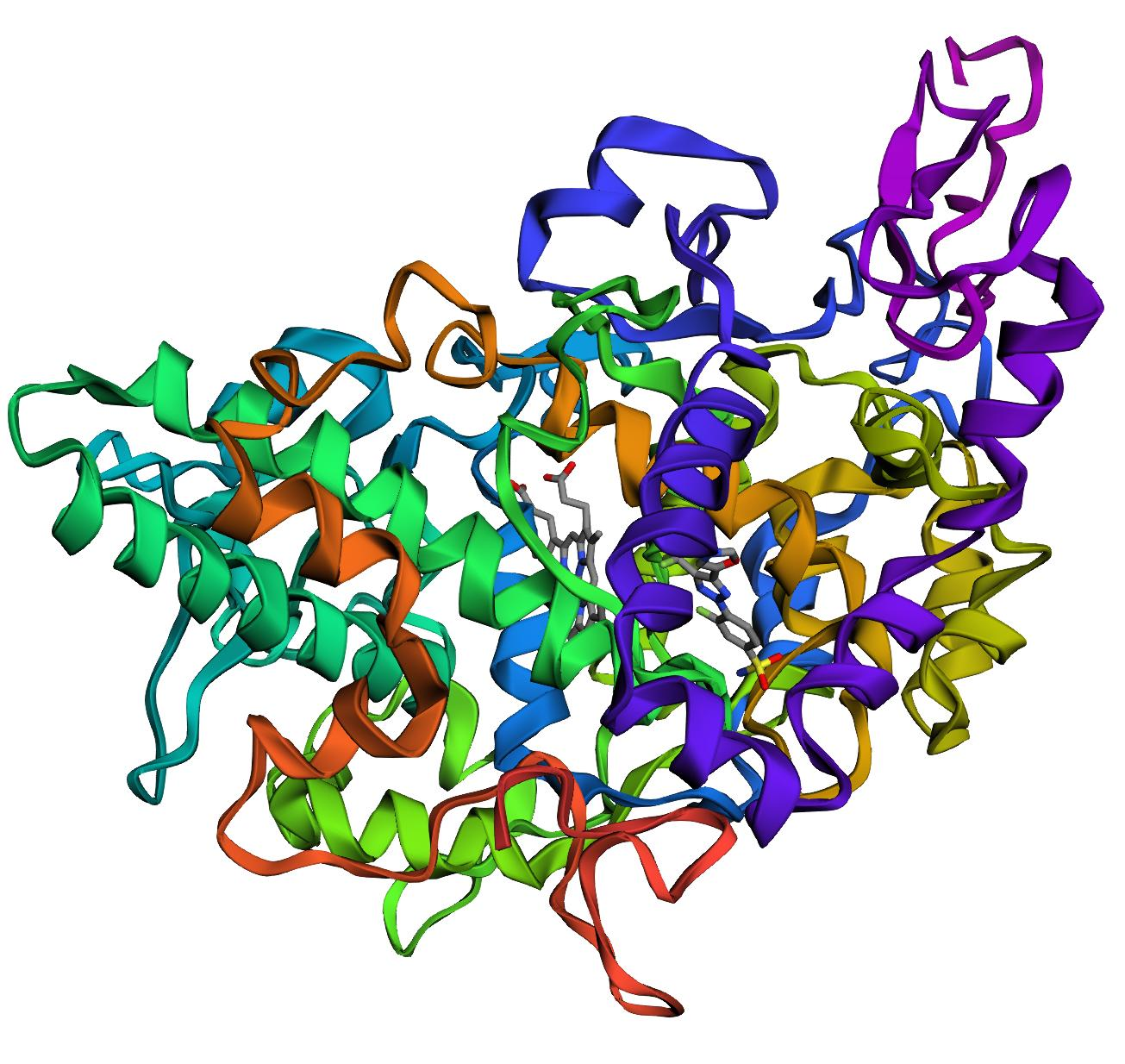
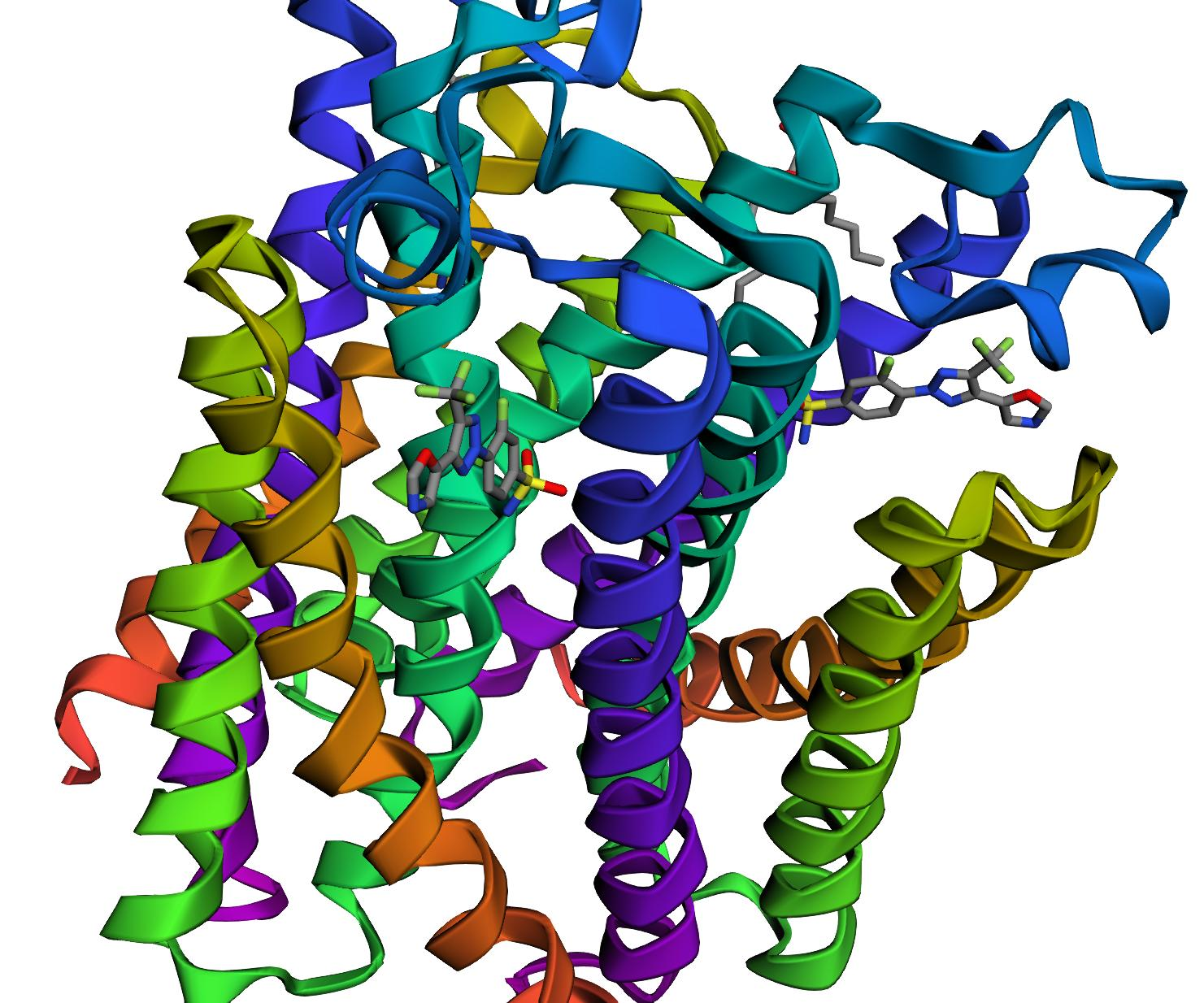
Inspect the full 3D holoenzyme coordinates of Human COX-2 (PDB: 5KIR) complexed with lead inhibitor MAI, the trimeric Human mPGES-1 pocket (PDB: 8PYV), and MMFF94-optimized 3D conformers of MAI_2 and MAI_8.
Human COX-2 + MAI Holoenzyme Complex (PDB: 5KIR)
Full 3D protein-ligand coordinates showing side-pocket engagement (Arg513, His90, Tyr355, Ser530)
Interactive 2D Chemical Structure & Dual-Target Property Inspector
Inspect each of the 10 AI-designed MAI candidates extracted directly from the manuscript alongside their COX-2 (5KIR) and mPGES-1 (8PYV) binding energies.
High-Resolution Scientific Figures & Diagrams
Select any figure below to inspect in high resolution or open the original scientific graphic in a new tab.
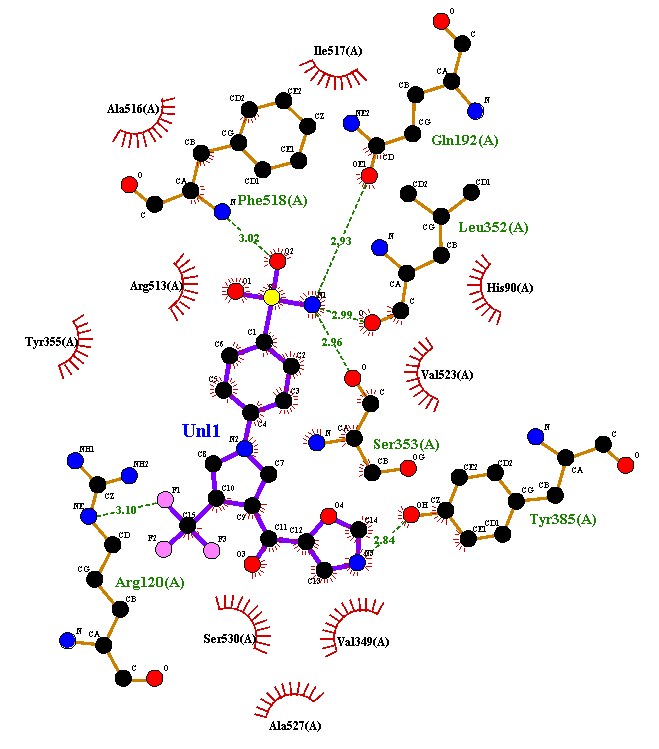
3D binding pose and 2D interaction network of MAI_2 inside the COX-2 active channel (-10.8 kcal/mol).
Downloadable Research Objects, 3D Structures & Datasets
Direct access to verified 3D coordinates (.pdb, .sdf), biological sequences (.fasta), structured evaluation datasets (.json, .csv), and official manuscripts/QMRF reports (.pdf).
COX-2 + MAI Complex 3D Coordinates (5KIR_MAI_complex.pdb)
Full atomic 3D PDB structure of Human COX-2 (5KIR) with docked MAI lead ligand coordinates.
mPGES-1 Trimeric Pocket 3D Coordinates (mPGES1_8PYV_pocket.pdb)
3D PDB receptor coordinates of Human mPGES-1 (8PYV) catalytic cleft.
MAI_1–MAI_10 3D Conformer Library (MAI_1_to_10_library_3D.sdf)
Multi-molecule 3D SDF containing MMFF94-minimized coordinates and property tags for all 10 MAI leads.
MAI Series Quantitative Dataset (mai_candidates_data.json)
Structured JSON object with docking ΔG, predicted IC50, QED, SA Score, and ADMET profiles vs. Celecoxib.
MAI Benchmark Table (mai_candidates_benchmarks.csv)
CSV spreadsheet of all 10 MAI candidates for cheminformatics & QSAR analysis.
Full ChemRxiv Preprint Manuscript (paper.pdf)
Complete peer-archived manuscript (DOI: 10.26434/chemrxiv-2025-49xk0) with 2D/3D interaction diagrams.
Frequently Asked Scientific Questions
Why is dual COX-2 / mPGES-1 inhibition clinically superior to selective COX-2 inhibition alone?
Selective COX-2 inhibitors (coxibs) block all downstream prostanoids derived from PGH2, including vascular prostacyclin (PGI2), while leaving platelet TXA2 unopposed—creating a prothrombotic cardiovascular risk. Dual COX-2/mPGES-1 inhibitors selectively suppress pathogenic PGE2 synthesis while allowing PGH2 substrate shunting to preserve cardioprotective PGI2.
How do MAI_2 and MAI_8 compare quantitatively against Celecoxib and Indomethacin?
MAI_2 achieves -10.8 kcal/mol on COX-2 (vs. -9.8 kcal/mol for Celecoxib and -8.6 kcal/mol for Indomethacin) and -7.9 kcal/mol on mPGES-1. MAI_8 achieves -8.2 kcal/mol on mPGES-1 (nearly 1.8 kcal/mol stronger than Celecoxib at -6.4 kcal/mol) while maintaining -10.3 kcal/mol on COX-2.
Are the AI-generated MAI scaffolds synthetically accessible?
Yes. Every candidate in the MAI_1–MAI_10 family was filtered for synthetic accessibility (SA Score 2.31–2.71) and verified via computer-aided retrosynthesis to be synthesizable in 2 to 3 convergent steps from commercially available building blocks.
Explore All Peer-Evaluated Studies & Blind Challenge Benchmarks
NIH Tox21 Global Top-5 Open-Source Model
Multi-task deep self-normalizing toxicology predictor achieving 0.854 mean ROC-AUC and 5th place globally on the NIH/NCATS/EPA/FDA Tox21 12-endpoint Nuclear Receptor and Stress Response benchmark under strict Murcko scaffold splitting. Full weights open-sourced on Hugging Face (rasayan-labs/rasayan-tox21-snn).
OpenADMET PXR Induction Blind Challenge (Tier 1)
Prospective blind evaluation on 513 held-out small molecules in the OpenADMET Pregnane X Receptor (PXR) Induction Challenge. Rasayan_PXR achieved #2 raw RMSE (0.6725 ± 0.0238), #2 MAE (0.5256 ± 0.0181), #2 R² (0.3125), and #3 Spearman R (0.5698), finishing in Tier 1 statistically tied with the 1st-place submission under 1,000-iteration bootstrap confidence intervals.
Podoplanin GBM Multi-Epitope Vaccine (RasIC-01v)
End-to-end AI/ML-assisted immunoinformatics design, structural refinement, TLR3 docking, 100 ns molecular dynamics validation, and codon optimization of RasIC-01v: a 293-amino-acid multi-epitope subunit vaccine targeting Podoplanin (PDPN) in Glioblastoma Multiforme (ΔG = -18.6 kcal/mol, Kd = 2.3 × 10⁻¹⁴ M, 24 H-bonds with human TLR3).
OpenADMET CYP450 Blind Challenge (Global #1 TDI)
Comprehensive 3-track triumph in the OpenADMET Cytochrome P450 Inhibition Blind Challenge across CYP3A4, CYP2D6, CYP2C9, CYP2C19, and CYP1A2. Rasayan Labs achieved #1 Globally in Track 1 Time-Dependent Inhibition (TDI), Top-10 Globally in Track 2 Multi-Isoform Direct Potency (pIC50), and Tier 1 in Track 3 Blind Cryo-EM Ligand Pose Prediction across 43 high-resolution protein-ligand complexes using pH 7.4 ionization microstates and 3D Boltzmann conformer ensembles.
ICH M7(R2) Dual (Q)SAR Ames Mutagenicity System
Regulatory-grade dual (Q)SAR bacterial reverse mutation platform combining statistical machine learning (RS_BMUT v2.1, 85.4% balanced accuracy, 0.918 ROC-AUC) and mechanistic toxicophore knowledge rules (RS_Expert v2.1, 53 structural alerts + 6 mitigating detoxification rules) to achieve 88.4% combined balanced accuracy and 92.6% sensitivity across Salmonella typhimurium TA98, TA100, TA1535, TA1537, and E. coli WP2 uvrA (±S9).
Darvi-Gen: 863B Flagship Scientific & Agentic Model
Introducing Darvi-Gen, an 863.33B-parameter flagship scientific and agentic model with a 256,000-token active context window, powering patented lab notebook digitization (US 12,664,813 B1), RFP automation, autonomous retrosynthesis, Darvi Research, and end-to-end drug discovery.
Explore Our Interactive 3D Pocket Structures & Hit Discovery Platform
Inspect the docked 3D coordinates of our dual COX-2/mPGES-1 candidates or partner with Rasayan Labs to accelerate multi-target hit discovery for your therapeutic pipeline.