
Solving the hardest bottlenecks in science, chemistry, and enterprise R&D.
Darvi-Gen is an 863B-parameter flagship scientific and agentic model built for real-world execution, powering patented lab notebook digitization, autonomous retrosynthesis, rapid RFP automation, deep literature research, and end-to-end drug discovery.
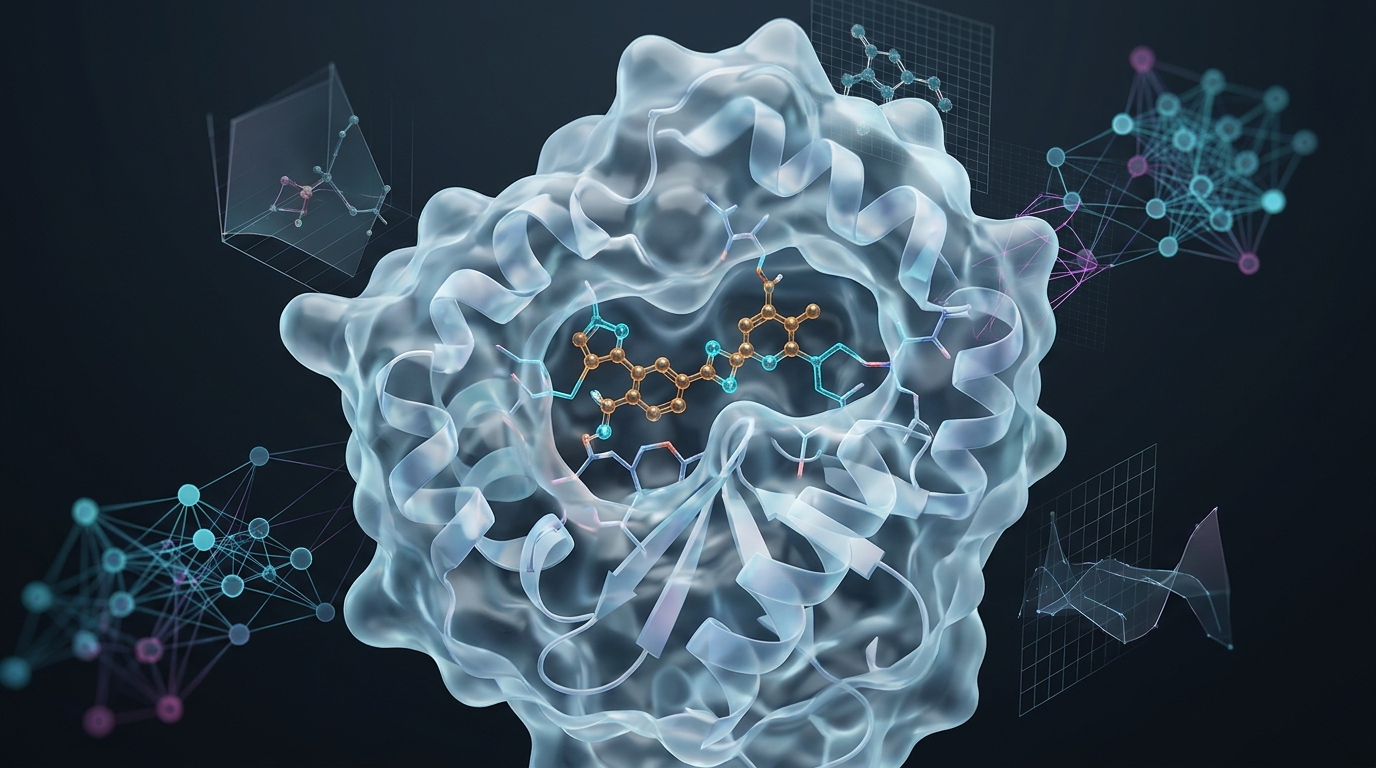
What Darvi Offers to the World
Scientific organizations, CROs, CDMOs, and pharmaceutical R&D teams lose thousands of hours to fragmented legacy records, manual synthesis planning, and multi-day proposal cycles. Darvi unifies every stage of chemical and biological workflows into a single autonomous operating system.
Transforming Legacy Lab Notebooks into Chemical Intelligence
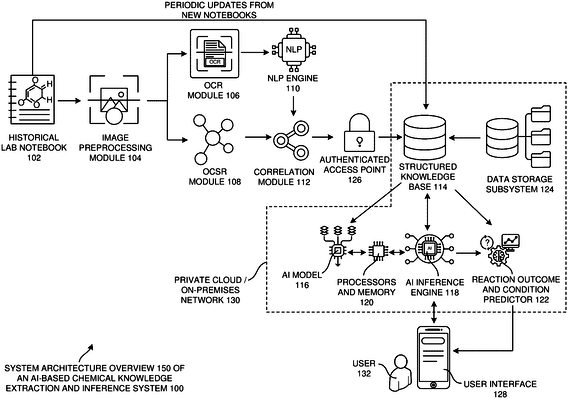
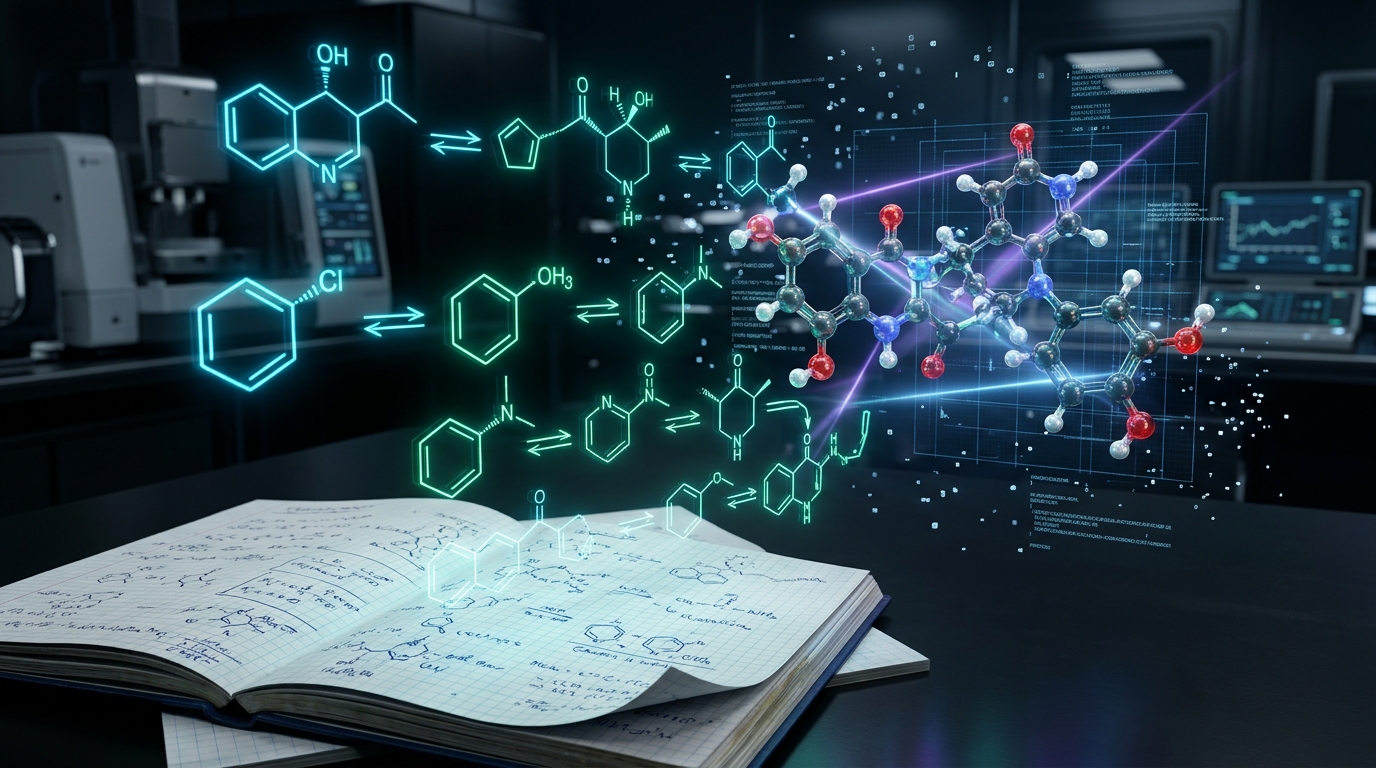
Decades of critical experimental knowledge remain locked inside handwritten laboratory notebooks, scanned PDFs, and hand-drawn reaction schemes. Powered by our granted US patent (US Patent No. 12,664,813 B1), Darvi combines ensemble Optical Chemical Structure Recognition (OCSR), handwritten OCR, and scientific NLP to convert raw lab pages into structured, queryable reaction databases.
- Extracts hand-drawn 2D skeletal structures, stereocenters, and reaction arrows directly into standardized SMILES and InChI formats.
- Correlates experimental conditions, catalysts, solvents, temperatures, and yields directly with molecular entities.
From Unstructured Client RFPs to Costed Proposals in Minutes
For CROs, CDMOs, and specialty chemical manufacturers, responding to complex customer Requests for Proposals (RFPs) traditionally takes days of cross-departmental coordination.
- Automatically ingests unstructured customer documents, target structures, purity specs, and scale requirements.
- Designs complete synthetic routes, estimates step-by-step yields and process hazards, and maps commercially available raw materials with live vendor pricing.
- Outputs audit-ready technical and commercial RFP packages in minutes rather than days.
Multi-Step Route Design Grounded in Real-World Makeability
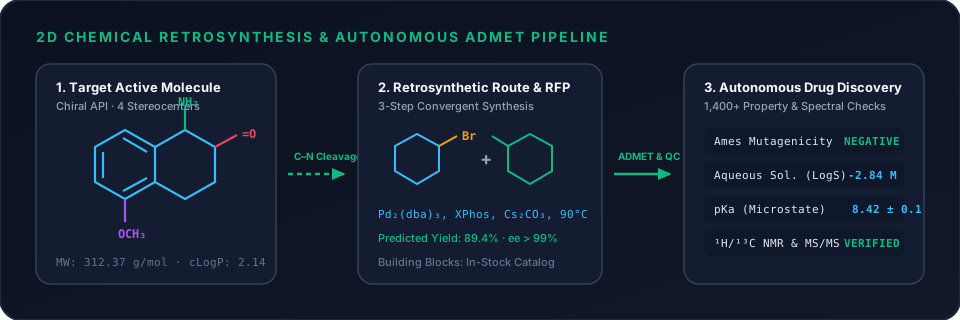
Darvi's retrosynthesis engine plans convergent and linear synthetic pathways for complex Active Pharmaceutical Ingredients (APIs) and novel small molecules down to purchasable building blocks.
- Evaluates reaction feasibility, regio- and stereoselectivity, protecting-group strategies, and impurity profiles at every disconnection.
- Optimizes for green-chemistry atom economy, step count, and supply-chain resilience across billions of indexed reactions.
Why Darvi Research Is Our Most Powerful Engine
Standard AI search tools summarize surface-level web snippets and frequently hallucinate citations or numerical values. Darvi Research is architected from the ground up as an autonomous scientific investigator:
- Multi-Stage Hypothesis & Literature Planning: Decomposes complex R&D questions into structured sub-investigations across peer-reviewed journals, clinical trials, and chemical patent corpuses.
- Closed-Loop Symbolic & Numerical Verification: Executes thermodynamic, pharmacokinetic, and statistical verification mid-research, ensuring every derived equation and numerical figure is mathematically proven before synthesis.
- Strict Claim-Level Citation Auditing: Every factual statement and quantitative metric is cross-audited against full-text primary sources, delivering publication- and regulatory-grade technical reports.
End-to-End In Silico Discovery & Multi-Parameter Optimization
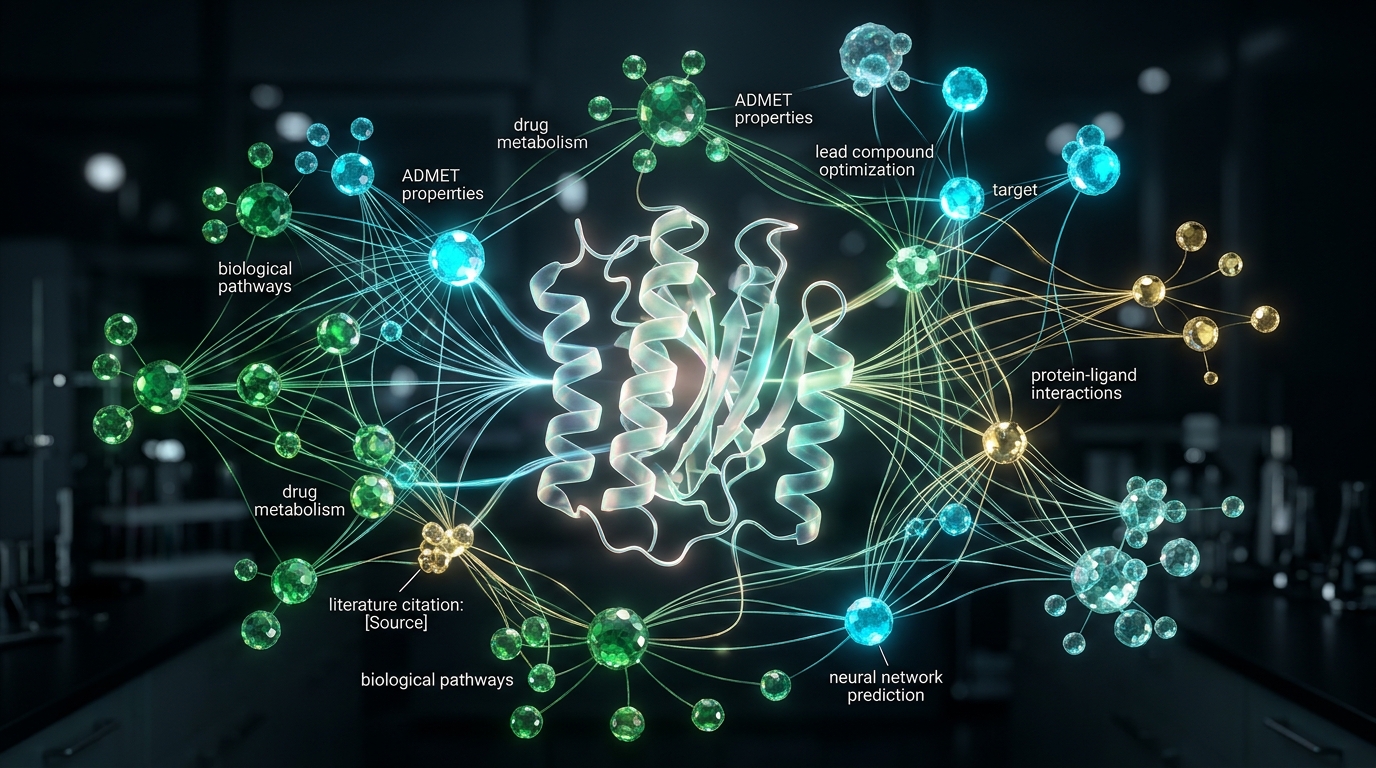
Internally, Darvi-Gen orchestrates closed-loop drug discovery workflows autonomously, bridging biological target understanding, generative molecular design, and synthesizability in a single continuous cycle:
- 1,400+ ADMET & Toxicity Models: Autonomously screens candidates across Ames mutagenicity, hERG liability, CYP450 inhibition, hepatotoxicity, and blood-brain barrier permeability.
- Physicochemical & Spectral Intelligence: Predicts microstate pKa, aqueous solubility (LogS), lipophilicity, and verifies structure elucidation via ¹H/¹³C NMR and MS/MS fragmentation models.
- Synthesizability-First Generation: Every generated lead candidate is simultaneously validated by the Retrosynthesis Engine so medicinal chemists only pursue molecules that can actually be synthesized in the lab.
- Autonomous Iteration: Identifies structure-activity relationships (SAR) from assay feedback and proposes optimized analogs without manual bottlenecks.
Model Overview & Benchmarks
Darvi-Gen is an 863B-parameter flagship model with a 256,000-token active context window. Below are our measured production inference speed benchmarks alongside our consolidated frontier quality scorecard.
1. Production Inference Speed & Throughput (863B Parameters)
| Inference Metric | Darvi-Gen (863B Flagship Model) |
|---|---|
| Total Model Parameters | 863.33B Parameters |
| Active Production Context Window | 256,000 Tokens (262,144) |
| Single-Stream Decode Speed (1 Request) | 127.1 tokens / sec (140.3 tok/s on scientific reasoning) |
| Single Deployment Concurrent Throughput (16 Streams) | 436.9 - 476.8 tokens / sec |
| 4-Deployment Production Cluster Throughput (64 Concurrent Streams) | 1,696.2 tokens / sec (1,747.6 tok/s peak) |
| Long-Context Decode Speed at 46K Prompt Context | 111.5 tokens / sec (1 stream) · 286.6 tokens / sec (4 streams) |
| Ultra-Long Context Prefill Speed (100K / 250K Tokens) | 10,982 tokens / sec (9.2s) · 12,864 tokens / sec (19.4s) |
2. Frontier Quality Benchmark Scorecard
| Benchmark | Darvi-Gen (863B) | GPT-6 Astra | Claude Fable 5.2 | Kimi K3.1 Pro | DeepSeek-V4.1-Flash |
|---|---|---|---|---|---|
| Agentic & Scientific Research | |||||
| Agents' Last Exam (ALL / w/ Tools) | 58.0 | 41.8 (59.3*) | - | 43.2 | 37.7 (31.8) |
| HLE-Full w/ Tools | 58.0 | 57.2 | 74.2 | 70.0 | 58.8 |
| Darvi Scientific & Quantitative Research Suite (33 Targets) | 100.0 | - | - | - | - |
| MCP-Mark (Tool & Protocol Execution) | 62.5 | - | - | - | 61.4 |
| Reasoning, Science & Mathematics | |||||
| HLE w/o Tools (200-Q Stratified / Core-50 / Full) | 33.5 (42.0 Core-50) | 53.6 | 61.4 | 51.1 | 42.6 (31.7*) |
| GPQA-Diamond (PhD Science) | 91.7 | 96.1 | 95.2 | 94.2 | 92.2 (90.2) |
| AIME 2026 | 96.7 | 98.8 | 96.7 | 97.5 | 96.2 |
| IMO-AnswerBench | 90.0 | 93.5 | 90.4 | 91.2 | 89.9 |
| Coding & Software Engineering | |||||
| DeepSWE v1.1 | 77.2 | 74.1 | 74.3 | 75.5 | 77.0 (74.2) |
| SWE-Bench Verified | 83.3 | - | - | - | 81.8 |
| LiveCodeBench (2508-2602) | 91.7 | - | - | - | 91.2 |
| HardTests (Output / Gen) | 100.0 / 85.0 | - | - | - | 77.1 / 84.7 |
| Multimodal & Visual Perception | |||||
| CharXiv (RQ) w/ Python | 91.5 | 92.8 | - | 93.4 | 85.6 |
| MMMU-Pro w/ Python | 86.0 | 87.8 | - | 90.0 | 82.5 |
| BabyVision (388 Tasks, Single-Pass pass@1 / Multi-Run*) | 57.2 (73.3 MC) | 96.6* | - | 95.4* | 37.4 (92.5*) |
| ZeroBench_main (100 Tasks, pass@1 / pass@5*) | 19.0 (31.3 OE) | 58.0* | - | 63.0* | 12.0 (51.0*) |
| OmniDocBench 1.5 (Edit Distance, lower is better) | 0.104 | - | - | - | 0.105 |
3. ChemBench Full-Corpus Evaluation (2,785 Questions, Raw w/o Tools)
Evaluated across the complete 2,785-question Jablonka Group ChemBench corpus without external tools under strict full-set multiple-choice matching and <1% relative numerical tolerance.
| ChemBench Subset / Chemistry Subfield | Questions | Correct | Darvi-Gen (863B) Raw Score |
|---|---|---|---|
| Overall Corpus & Curated Benchmark Splits (Raw w/o Tools) | |||
| ChemBench Full Corpus (All 9 Chemistry Subfields, w/o Tools) | 2,785 | 1,966 / 2,785 | 70.59% |
| Core 7 Chemistry Subfields (Analytical, General, Inorganic, Materials, Organic, Physical, Technical) | 1,110 | 985 / 1,110 | 88.74% |
| Human-Expert Benchmark Subset (All 236 Curated Questions) | 236 | 207 / 236 | 87.71% |
| Human-Expert Subset (w/o Tools Split) | 115 | 95 / 115 | 82.61% |
| Human-Expert Subset (w/ Tools Split, Evaluated Raw w/o Tools) | 121 | 112 / 121 | 92.56% |
| International Chemistry Olympiad (IChO Subset) | 177 | 174 / 177 | 98.31% |
| Oxford University Press (OUP University Chemistry Subset) | 187 | 178 / 187 | 95.19% |
| Numerical Calculation Tasks (<1% Relative Error Tolerance) | 243 | 212 / 243 | 87.24% |
| Multiple-Choice Tasks (Exact Full-Set Match) | 2,542 | 1,754 / 2,542 | 69.00% |
| Complete Breakdown Across All 9 ChemBench Subfields (2,785 Questions) | |||
| General Chemistry | 149 | 141 / 149 | 94.63% |
| Inorganic Chemistry | 92 | 86 / 92 | 93.48% |
| Organic Chemistry | 429 | 391 / 429 | 91.14% |
| Physical Chemistry | 165 | 150 / 165 | 90.91% |
| Technical Chemistry | 40 | 34 / 40 | 85.00% |
| Materials Science | 83 | 67 / 83 | 80.72% |
| Analytical Chemistry | 152 | 116 / 152 | 76.32% |
| Chemical Preference (Medicinal Chemistry Virtual Screening Pairs) | 1,000 | 621 / 1,000 | 62.10% |
| Toxicity and Safety (GHS Hazard Statements & Chemical Reactivity) | 675 | 360 / 675 | 53.33% |
Deploy Darvi-Gen for Your Scientific & Enterprise Workflows
Experience autonomous retrosynthesis, patented lab notebook digitization, RFP automation, and deep scientific research on Darvi.ai, or deploy dedicated enterprise instances on your own infrastructure.